 Rob
A weekly meal planner can answer three practical questions: which meals need organising, what food is already available and what needs to be bought. You can make those decisions without planning every snack or inventing a new recipe for each day. Start with the meals that cause the most uncertainty in your household.
If evening commitments affect which meals are realistic, mark them on the weekly planner before choosing the meals. A short cooking evening needs a different plan from an evening at home.
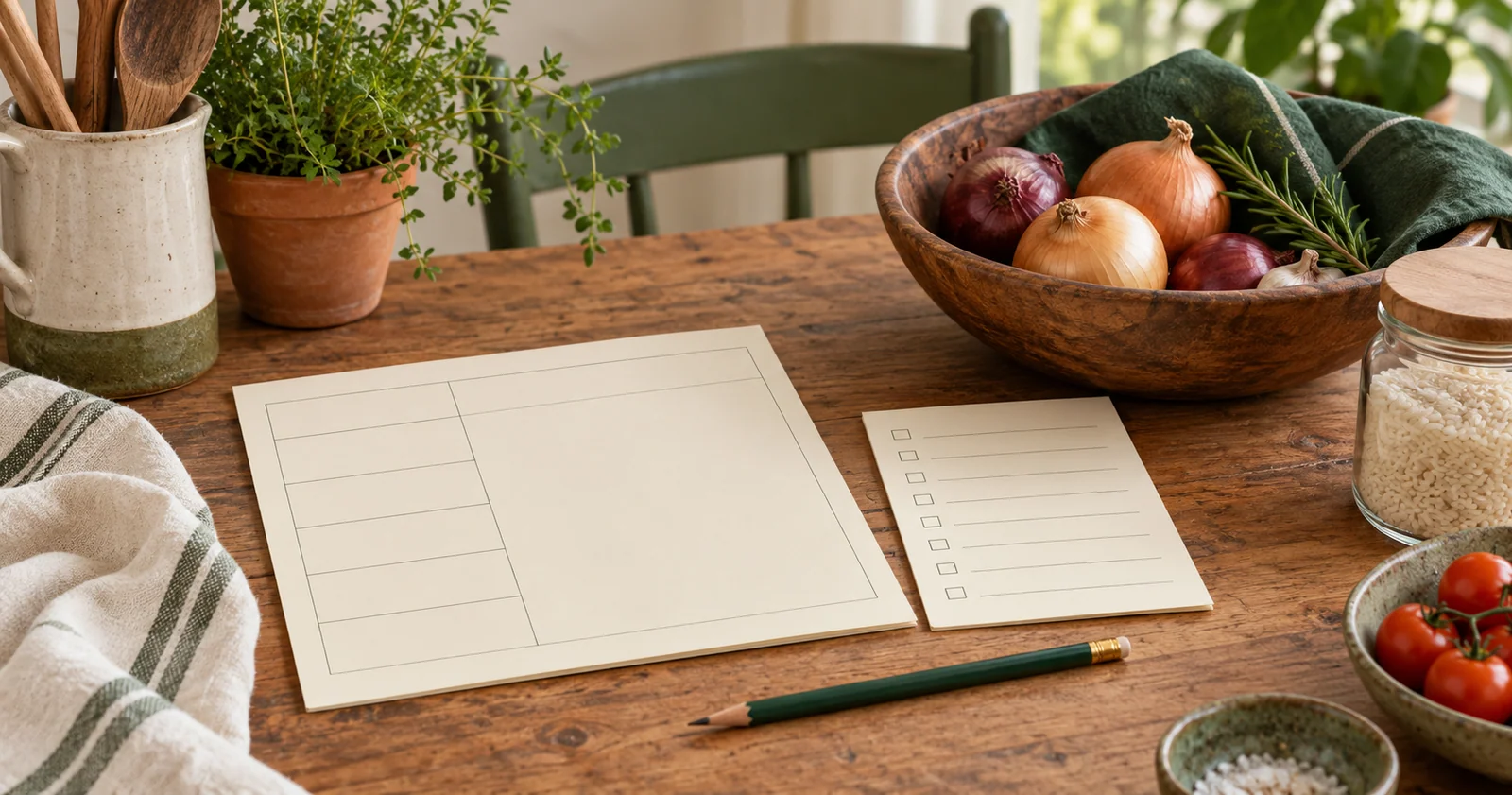
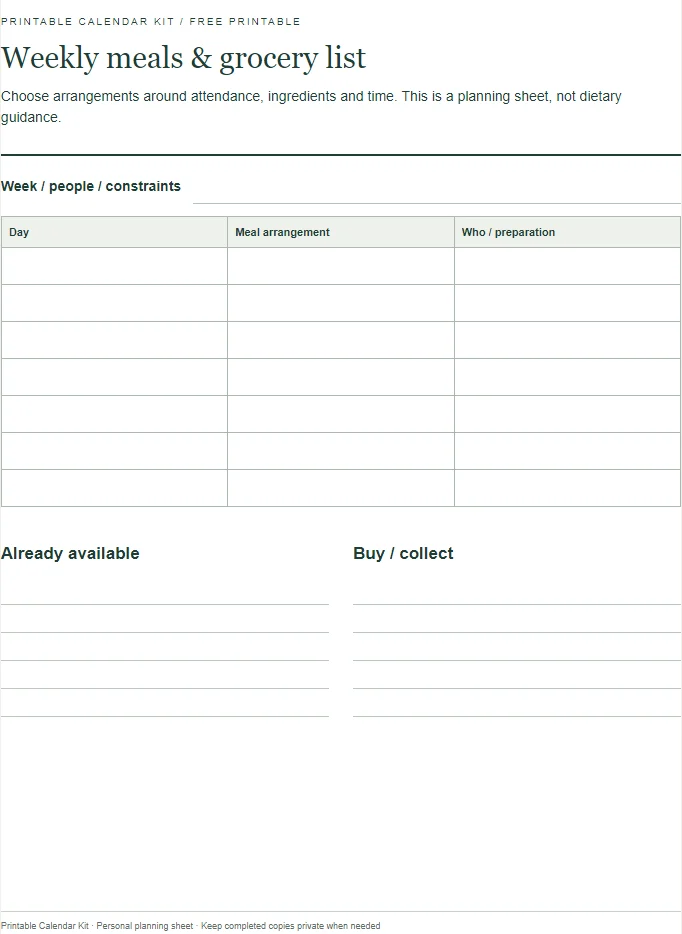
Open the printable weekly meal planner and grocery list. It includes a blank weekly sheet and a completed fictional example. The layout is a household organisation tool, not a dietary plan. Choose meals and food arrangements that suit your needs and use appropriate recipe and food-safety instructions separately.
Check who will be home before choosing meals
Look at the week’s commitments first. Note evenings away, late returns, visitors and occasions when different people will eat at different times. The useful starting number is the number of meals you actually need to organise, not automatically seven elaborate dinners.
In the worked example, two adults usually eat at home. One is out on Tuesday, both return late on Thursday and two guests are coming on Saturday. That creates different kinds of planning decisions. Tuesday needs a single-person arrangement, Thursday needs something practical for the late return and Saturday needs an agreed guest count.
Write constraints in the notes column before selecting food. “Home after eight” is an important fact; “make something quick” is still an unresolved choice. Turn the note into a specific arrangement once you know what is available. If someone else is taking responsibility for a meal, confirm that rather than assigning it silently.
Check cupboards, refrigerator and freezer
Make a short inventory of items relevant to the coming meals. You do not need to catalogue the whole kitchen. Look for ingredients already open, food you intended to use and freezer portions you can identify. Record enough detail to know what the item is and whether it fits the plan.
The example household finds pasta, rice and canned beans in the cupboard, plus ingredients that could support a vegetable tray bake. They also find an unidentified freezer container. That container is marked “check contents and date” rather than confidently assigned to Thursday. An uncertain item should not become the only plan for a meal.
Use package labels and reliable food-safety guidance when deciding whether food can be used. The Food Standards Agency’s storage guidance explains why storage instructions and date labels matter. A planner cannot establish safety from a handwritten description or an attractive-looking meal idea. Keep any storage, thawing or reheating instructions with the actual food or recipe you are following.
Choose a simple pattern for the week
You can use familiar meal types to reduce decisions: a pasta meal, a tray bake, a meal someone else prepares, or a flexible evening. These are planning categories, not nutritional recommendations. Their purpose is to connect food arrangements with the time and people available.
For the fictional week, Monday is a familiar pasta meal using cupboard ingredients. Tuesday is the at-home person’s choice. Wednesday is a tray bake. Thursday is a specifically chosen convenient meal for the late return. Friday is a rice-and-bean dish. Saturday’s guest meal is agreed with the visitors, and Sunday remains flexible until the household checks what is available.
A flexible evening still needs a decision point. Write “review remaining ingredients on Sunday morning” rather than leaving an unexplained blank. If there is not enough suitable food, you have time to choose another arrangement. Flexibility works better when someone knows when the choice will be made.
Turn meals into a consolidated grocery list
A small example grocery calculation
| Day | People / constraint | Arrangement |
|---|---|---|
| Monday | 2 | Pasta using cupboard ingredients |
| Tuesday | 1 at home | At-home person’s choice |
| Wednesday | 2 | Vegetable tray bake |
| Thursday | 2, late return | Specifically chosen convenient meal |
| Friday | 2 | Rice-and-bean dish |
| Saturday | 4 including2 guests | Guest meal agreed with visitors |
| Sunday | Check what is available | Review ingredients in the morning |
| Ingredient | Monday requirement | Friday requirement | Combined before checking stock |
|---|---|---|---|
| Onions | 2 | 1 | 3 |
Read each selected recipe or arrangement and list what is missing. Combine repeated ingredients where the units match. If Monday needs two onions and Friday needs one, the combined requirement is three onions before checking what you already have. Do not combine a count, a weight and a vague “handful” without understanding how the recipe uses them.
Separate the amount required from the amount sold. If you need three individual items but the shop sells them in a pack of four, the extra item needs somewhere sensible to go in the plan. The worksheet leaves room for a note rather than pretending every purchase exactly matches a recipe quantity.
Group the list by a route that helps you shop: produce, chilled items, cupboard items and household supplies, for example. The categories are editable on paper. A small local shop may suit a different grouping from a larger supermarket. Use a clear tick to distinguish items bought from items you decided no longer to buy.
Add preparation and responsibility
Some meal arrangements need action before the evening itself. A recipe may call for advance preparation, an ingredient may need collecting or the person cooking may need to know when the kitchen is available. Put the preparation action beside the meal and, where timing matters, on the household calendar.
Write the responsible person’s name only after agreeing it. “Sam cooking Wednesday; Alex checking ingredients Tuesday” divides the work more clearly than “we are having a tray bake”. Cooking, choosing, shopping and clearing up can be separate jobs. The planner can make those jobs visible without prescribing how your household should share them.
For visitors, confirm relevant requirements directly and choose an arrangement everyone understands. A note such as “ask guests about food requirements by Wednesday” is a better starting action than making assumptions from a previous visit. Keep private details off a sheet displayed where other people can read it.
Change the plan when the week changes
If Wednesday becomes unexpectedly busy, move or replace the meal and check its ingredients at the same time. Shifting a meal on paper does not automatically make all its ingredients suitable for several more days. Decide what needs using, storing according to instructions or buying later.
Keep the changed plan legible. Cross out the old arrangement once and write the replacement next to it. If a shopping list has already been shared, update the person using it. Two accurate sheets are only useful if they reflect the same decision.
At the end of the week, make a short note about a logistical problem worth remembering. “Thursday meal took longer than expected” can help next week’s choice. “Bought ingredients for a meal nobody was home to eat” suggests checking attendance earlier. You do not need to rate every meal or preserve every weekly sheet.
Print and use the resource
The blank page places meal arrangements beside the shopping list so you can check one against the other. Select A4 or Letter and portrait orientation, then preview the page. Turn off browser headers and footers for a cleaner copy. The separate example page can be left unprinted once the layout is familiar.
If you organise only dinners, label the meal column accordingly. If breakfasts or lunches need planning too, use another copy or list only the arrangements that differ from your usual pattern. Crowding three meals and several people into a single small cell can make the page harder to use than two clear sheets.
Questions about meal planning
Do I have to plan all seven days?
No. Plan the days that need a decision and mark the others clearly. “Eating elsewhere”, “person choosing on the day” or “review available food Sunday morning” explains the arrangement better than a blank that everyone interprets differently.
Can this help with a shared shopping trip?
Yes. Agree one current grocery list and mark who is buying which items. If someone adds ingredients after the list is shared, tell the shopper. The printable does not synchronise changes automatically, so the household needs a simple way to confirm the latest version.